
CONNECTIONS: Walking to Florida alongside the Mohawk Trail
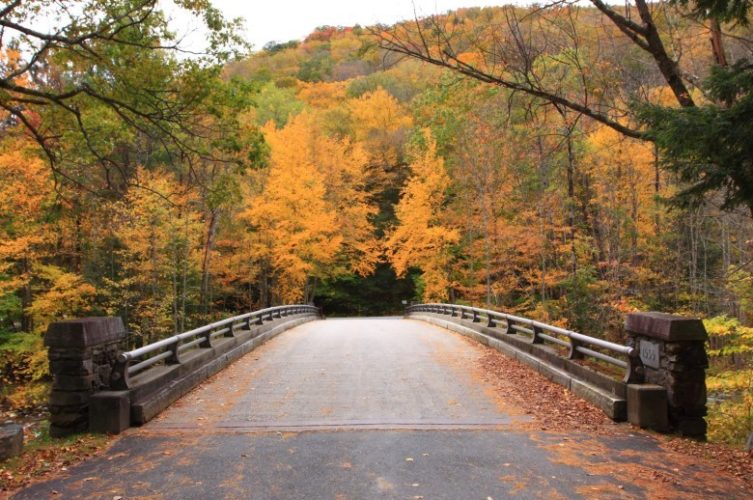
A bridge on the Mohawk Path in Greenfield, Massachusetts. Photograph courtesy Yankee Journal / Ernst Krenger
About Connections: Appreciate it or detest it, heritage is a map. Those people who dislike historical past assume it irrelevant numerous who enjoy background believe it escapism. In fact, heritage is the clearest road map to how we acquired listed here: America in the 21st century.
The Mohawk Path started as a 100-mile-extended Indigenous American footpath. The path, through what is now Berkshire County, was a trade route connecting Atlantic tribes with tribes in Upstate New York. Indigenous peoples called its best place Spirit Mountain. Thee path touched five rivers and climbed a mountain with lots of stopping areas. Afterwards, the highest place (2,272 ft) was named Whitcomb Summit the rivers have been dubbed the Connecticut, Millers, Chilly, Deerfield, and Hoosic, and the mountain named Hoosac. One particular halting position on the trail became acknowledged as Florida, Massachusetts.
Though Florida was not integrated until finally 1805, white individuals began to settle there as early as 1740. Some had horses, oxen, or donkeys, but a lot of walked in, that is, “used shank’s mare.”
Through the Revolutionary War, vacation on the trail was pageant-like as troopers in comprehensive gown uniforms massed and marched by means of. They say the most picturesque was on the early morning of August 16, 1777. The Charlemont Minutemen were marching to enhance “the patriots” at the Battle of Bennington. Needing to make swift function of the journey, they “rode and tied.” That is, the 1st guy rode a horse to a predetermined spot. He tied up the horse and completed the journey on foot. A next male rode to a predetermined spot, tied the horse, and walked to the following horse. All the Minutemen did the similar. That way, the adult men walked and rode, the horses carried and rested. They built the 35-mile-vacation in a lot more time than just one man and a rapid horse would, but much considerably less time than a male going for walks could.
For common folk, walking or riding, there were being turnpikes and shunpikes. Abundant adult men with large tracts of land place in turnpikes and charged tourists a toll. Poorer adult males located substitute trails to steer clear of spending, that is, shun the tolls. A single story is an severe instance of the want to shun tolls.
A rich man around Florida, one Colonel White, built a turnpike. He hired the Widow Nelson to stay in the tollhouse beside the highway. Conscientious, she would pop out of the toll property and block the road, if needed, to acquire a toll. 1 evening, she did just that.
The rider, however, was bent on not paying. He scooped her up and rode off. The correct toll is not recorded, but it was likely significantly less than what that impetuous move expense him. He place the widow down at an inn, paid out for her night’s rest, and gave her 5 pence to seek the services of anyone to consider her again to the tollhouse in the morning. Evidently, for this rider, it was not the amount of the toll but the principle.
In 1848, Williams pupils ran along the trail for activity and exercising, outpacing the ox carts. In the 1850s, Nathaniel Hawthorne drove it and declared, “I have in no way pushed thru such passionate surroundings.”
Driving by means of
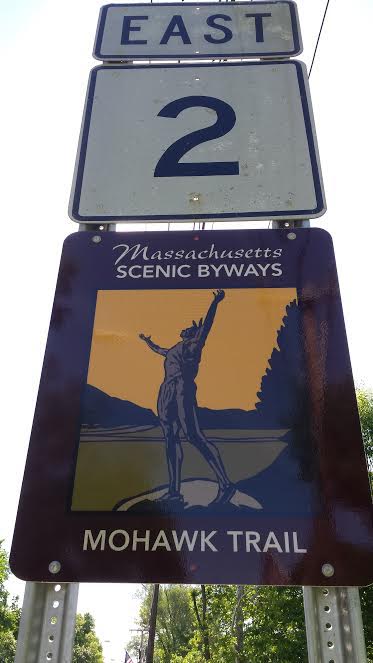
In 1914, the Massachusetts Highway Office concluded the Mohawk Path as a scenic drive. It does not basically trace the Mohawk’s trail it crisscrosses it generally and mirrors it at times. It also has its have name, Mass 2 and Mass 2A, and goes from Westminster to Williamstown.
The present day Mohawk Trail is only 69 miles of the first 100. Continue to, paved or unpaved, traversed by horse or horsepower, it is thought of just one of the most wonderful drives in the condition. One hundred seventy a long time following Hawthorne, it is nevertheless a drive really worth taking.
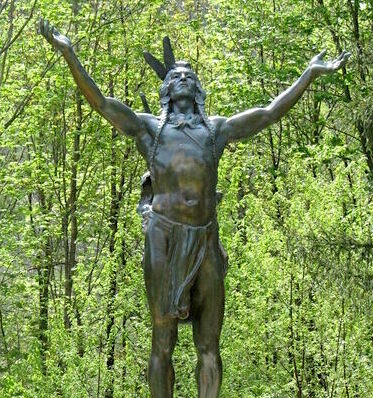
The Elk was positioned at Whitcomb Summit in 1923, and “Hail to the Sunrise” was put in Mohawk Park in 1932 as a tribute to Indigenous American heritage. Between the two, the sights are grand. A part of the path parallels the Deerfield River, passes by way of the village of Shelburne Falls, and crosses the Bridge of Flowers.
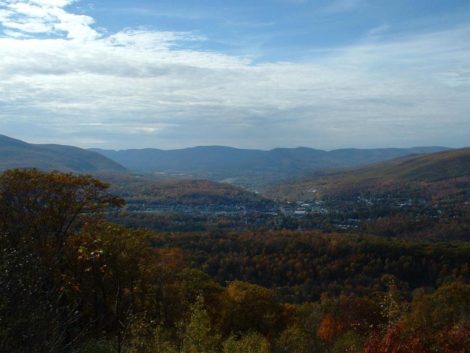
The route is not flat, smooth, or quickly, and that is 50 percent the pleasurable. It also has a couple thrills there is a hairpin convert that overlooks North Adams and the Taconics, and the Connecticut River crossing at the old King’s Bridge pump presents just the appropriate volume of adrenaline. At another issue, the trail descends sharply down the japanese slope of the Hoosac Range to “Dead Man’s Curve.”
Portion of the historic footpath that runs by means of Florida, Savoy, and Charlemont was positioned on the Nationwide Sign up of Historic Areas almost 50 decades in the past. Honoring the background is easy to understand, but why was it identified as the Mohawk Trail? No a single knows. The Mahicans were settled in Berkshire County, the Pocumtucks settled near Deerfield, and both equally were farmers. At most, the Mohawks walked via. They traveled from searching floor to searching floor below, in New York and Canada. So, why identify the path following a peripatetic persons who ended up hunter/gatherers and fishermen passing via?
One particular guess is that they were being also warriors. They fought with bow, arrow, club, and defend. It was told that in the late 17th century, Mohawks passed via what would become Deerfield. They attacked and wiped out the Pocumtucks and marched on. Before long, the vacant farmland was taken more than by the very first white settlers — the Dutch and French. They continued to shift east, and lastly, walked into Florida.


