
Biden reversal presents reduction to divided family members
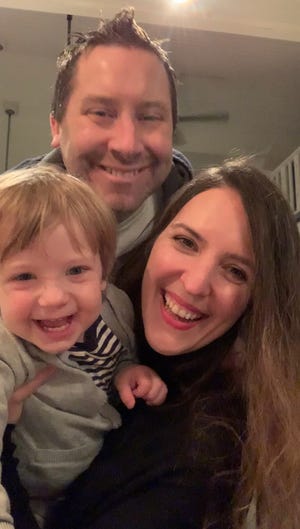
At any time given that her son was born in 2019, Sarvin Haghighi, a Tehran-born visible artist in Chicago, has produced day-to-day online video phone calls to her mother and father so they can share in their grandson’s lifestyle. And each individual day, she mentioned, it breaks her coronary heart.
Kian, who will change 2 next month, is enthusiastic to clearly show his toys to his Iranian grandmother when he sees her onscreen. But, finally, Haghighi needs her mom could hold and hug her grandson.
“There’s not a working day that I really don’t have a teary eye,” Haghighi mentioned.
The two have been separated by extra than miles: As Iranian citizens, her dad and mom have been barred from viewing the United States by an executive get issued in 2017 by former President Donald Trump. The so-known as Muslim Ban, which on the grounds of nationwide protection prohibited U.S. entry by people today from particular primarily Muslim countries, which includes Iran, was rescinded by President Joe Biden on his initially working day in office.
Biden’s immediate and decisive lifting of that ban, as properly as other individuals concentrating on many African and Asian nations, brought extended-awaited relief to 1000’s denied the chance to see family members and liked kinds in the United States. But whilst the hope of reconnection now looms as a actuality for many, so, too, does a recognition that a lot of missed times are irretrievably misplaced.
“In addition to it staying excruciatingly agonizing to be aside from cherished ones, you’ve skipped out on milestone opportunities, academic alternatives, the possibility to rejoice or mourn together,” explained Avideh Moussavian, legislative director for the Countrywide Immigration Legislation Centre. “You can never make up for that.”
For several prepared – and in some conditions, driven – to depart their international locations to join or go to relations or loved kinds in the United States, theTrump administration’sban upended consequential strategies and hopes. Some filed for waivers and waited as programs have been held up indefinitely other individuals bailed, compelled by violence-torn homelands or other situations to resettle in areas where by they had no relatives.
“Others are nonetheless in refugee camps,” said Aarti Kohli, govt director of San Francisco-primarily based Asian People Advancing Justice – Asian Legislation Caucus. “I indicate, this was 4 decades. For people of us suffering from COVID and not observing other individuals over the period of time of a calendar year – this just magnified that.”
Grandparents missed observing grandchildren occur of age. Other individuals were being kept from spouses and kids. Marriages ended. Individuals died devoid of the potential to tell their cherished kinds goodbye.
“You never have a second opportunity,” Kohli claimed. “You don’t have a ‘later on.’”
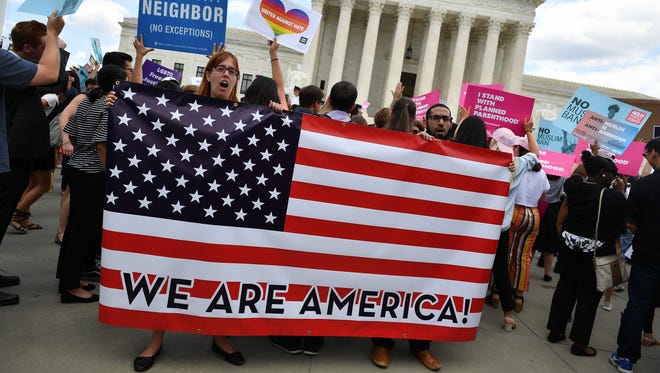
In 2017, Haghighi traveled to Australia, wherever her siblings are citizens and have been internet hosting their mothers and fathers, for a loved ones check out. It was quickly before Haghighi, who by then experienced her eco-friendly card, would be qualified to use for U.S. citizenship, a method she planned to initiate when she returned to Chicago to rejoin her partner, Andy Culley, who she’d satisfied although climbing Mt. Kilimanjaro in 2011.
Two times right before her flight from Melbourne, Trump signed Executive Buy 13769 – and quickly, Haghighi identified herself stranded and in limbo. In a semi-worry, with no thought how extensive she and Culley would be separated, the couple discussed their choices. At a person level, they talked about relocating to Canada.
Culley joined day-to-day demonstrations and consulted with immigration attorneys at Chicago’s O’Hare Global Airport. With the help of advocacy teams like the American Civil Liberties Union, Haghighi was capable to return within just a 7 days. She was so grateful to be home, she reported, that her legs turned to jelly as she approached the customs kiosk, virtually speechless when she was enable by.
‘It’s been a hard 4 years’
In accordance to Kohli, more than 40,000 individuals have been denied visas as a final result of the ban, nevertheless it is complicated to know how quite a few extra were being discouraged from applying as soon as it went into effect. Irrespective of the ban’s stated anti-terrorism rationale, she reported, minor evidence indicated that it experienced been based mostly on a systematic assessment of these worries.
Two early iterations of the ban were being quashed by federal judges as discriminatory on religious grounds, but the Supreme Court upheld a 3rd model in 2018 that prohibited vacationers from Iran, Libya, Syria, Yemen, Somalia and North Korea, as perfectly as political officers from Venezuela.
In early 2020, multiple Asian and African nations were being added as perfectly – Eritrea, Nigeria, Kyrgyzstan, Myanmar, Sudan and Tanzania.
That Biden straight away lifted the travel bans was symbolically significant, advocates mentioned, as was wording in his executive order that strongly condemned them not just for the pain they experienced brought on but for violating American beliefs.
“These actions are a stain on our countrywide conscience and are inconsistent with our extensive historical past of welcoming individuals of all faiths and no religion at all,” the buy browse. “… They have jeopardized our worldwide network of alliances and partnerships and are a ethical blight that has dulled the ability of our illustration the world in excess of.”
Biden’s order instructed the Condition Division to deliver, in just 45 times, a program for expediting programs of those however awaiting waivers below the ban, as well as for refreshing reconsideration of apps denied as a result of the ban. Advocates hope those reconsidered applicants can have their costs waived, as very well. The 45-day period of time finishes March 6.
“It’s been a challenging 4 years,” mentioned Subha Varadarajan, a legal and outreach fellow for the No Muslim Ban Ever campaign, a coalition of far more than 100 civil and human rights companies that fought to overturn the ban as a result of litigation and advocacy. “Everyone’s just relieved.”
And while alter will not come overnight, Kohli stated, “the most critical point is that the president has acknowledged the harm and discriminatory intent of the ban and designed a determination to undo it. That’s a significant very first phase.”
Even as the lifting of the bans inspired optimism, advocates claimed, a perception lingers that they reflected a United States still grappling with elements of white supremacy and anti-Muslim bias.
“Islamophobia is 1 section of that more substantial obstacle that this region faces,” Kohli reported. “We’re a deeply troubled culture. We will need a reckoning.”
‘The fight is not about yet’
For Anas Tresh of Palo Alto, California, new years have proved to be “a really polarizing time.” As a Sacramento-born health-related resident at Stanford University, he’s had to distance himself from selected friends in excess of political disagreements, specifically individuals connected to the journey ban.
Tresh, whose dad and mom are from Libya, invested a portion of his large school decades there right up until the instability of civil war pushed the relatives to return to the U.S.
His Libyan grandfather, Abdulmagid Ghaffar, visited often and was in California in summer season 2019 when Tresh returned from a health-related-college rotation at the College of Michigan and seen that Ghaffar, who also holds U.S. citizenship, appeared jaundiced.
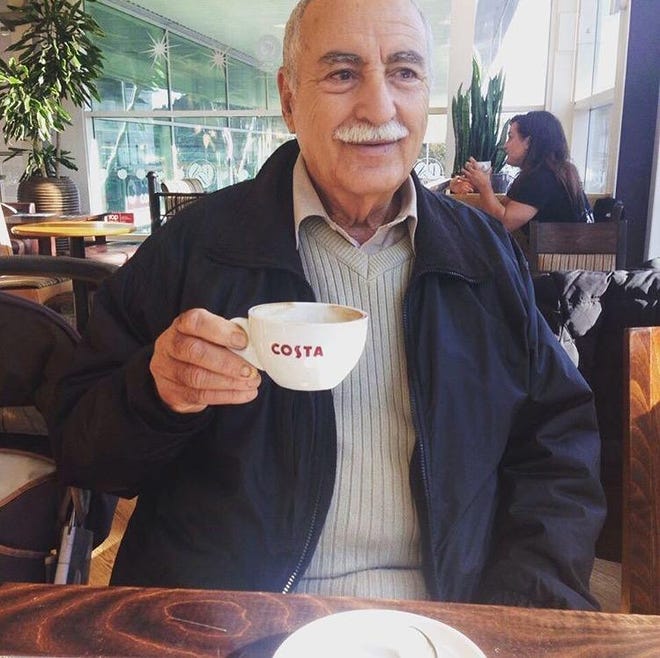
Tests indicated a cancerous mass in Ghaffar’s pancreas – but the vacation ban prevented his other little ones in Libya from staying with him through the worrisome period of time that adopted as he underwent several months of chemotherapy and then surgical procedure early past year.
“You can only visualize,” Tresh claimed. “Everyone was exceptionally apprehensive, asking yourself, ‘Are we heading to see our father once more?’ And for him, currently being away from them for so extensive was disheartening.”
As a family of faith, they hoped for the finest, even as they silently feared the worst. “And we recognized how repulsive this ban was, and that if he seriously was in his final days, that just about his entire relatives was in Libya and wouldn’t be able to see him.”
Fortunately, surgeons ended up in a position to extract the mass, assured they had gotten it all. And as shortly as Ghaffar was powerful plenty of to vacation, he returned to Libya to go on his recovery.
“As before long as he acquired again, he sent us a picture of him with his grandkid on his lap and a huge smile on his experience,” Tresh reported.
Tresh is aware other folks professional considerably worse circumstances and explained it is challenging not to feel resentment towards the earlier administration for the collective trauma he feels was unnecessarily inflicted as a result of the ban.
“For us, as Libyans and Muslims being below in The usa, where by we’re sensation constantly specific and discriminated towards, we identify that this is just 1 injustice that has been corrected,” he explained. “But there is nonetheless a extensive way to go, and we’re hoping it in no way happens once again.”
Advocates said healing can start off with the No Ban Act accredited by the Property past summer months, which right addresses the segment of the Immigration and Nationality Act that Trump drew upon to develop the bans. The proposed evaluate alters language to thwart spiritual-based mostly discrimination and provides balances to protect against upcoming presidents from unilaterally imposing similar constraints.
The act is now involved in the U.S. Citizenship Act of 2021 that Biden has sent to Congress.
“It’s incredibly significant to make confident there are affordable boundaries on the what the chief govt has the authority to do,” reported the Nationwide Immigration Law Center’s Moussavian, incorporating that even further outreach will be required to combat the “tremendous belief deficit” that continues to be in communities affected by the ban.
“Nothing can make up for the discomfort of that separation or the missing moments and options to be with persons you love,” she stated.
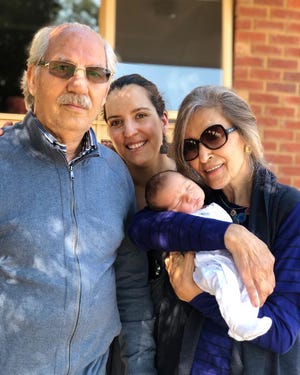
Haghighi did what she could, and in early 2019, she flew to Australia to give start to her son so that her mother and father could share in the moment.
“I couldn’t envision not having my mother there with me when my son was born,” she said.
Haghighi now volunteers in Chicago with the variety of advocacy corporations that experienced served resolve her problem, feeling like she needed to do one thing to help.
“This ban took away a ton of appreciate that my son could have gotten from his grandparents, and I can in no way get that again,” she said. At the similar time, “it feels good to be involved in these a strong movement. The fight is not in excess of nonetheless. We need to have to make sure it doesn’t come about yet again. Not to us. Not to anybody.”


