
Don Scott’s Polaroid journey sales opportunities to ‘Transformative Impressions’
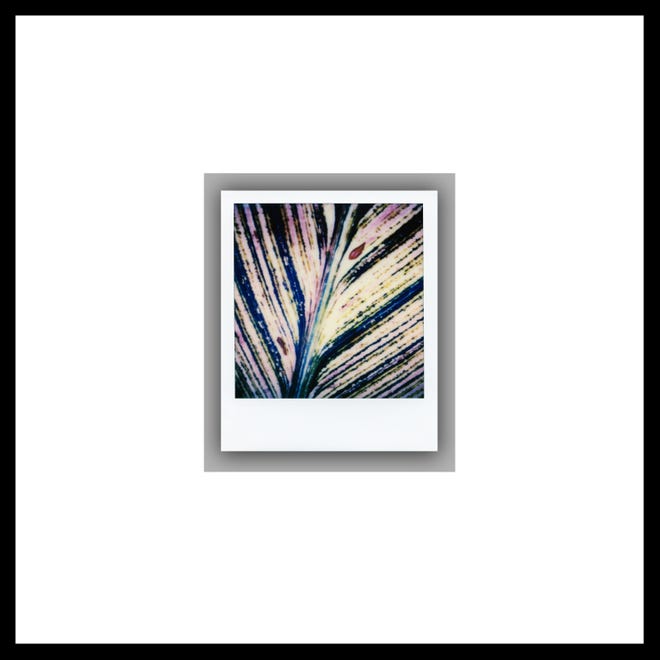
Again in the 1970s, in Don Scott’s hometown of Roanoke, Virginia, he started experimenting with Polaroid SX-70 cameras and movie.
“I did what was termed SX-70 manipulations, which meant when the picture came out of the digital camera, the emulsion in the film was pretty pliable. People in contrast it to the regularity of toothpaste. More than a period of about 3 or four hrs, you experienced the skill to [manipulate it],” mentioned Scott, who moved to Columbus in the late ’80s. “I utilised principally knitting needles to make impressions on the photo and make it glance really painterly. … I’ve often liked taking a solution that a organization may well design just for fun and satisfaction and turning it into an artwork kind.”
The initial Polaroid business went bankrupt in the early 2000s, but since then, a Dutch images corporation, which inevitably rebranded with the primary name, acquired Polaroid’s output machinery and created new instantaneous film products and solutions. The resurrection of the medium piqued Scott’s desire. “It’s all over again becoming promoted towards young men and women who just want to snap pics and have enjoyment,” he stated, “but that is not how I am working with it.”
In late 2019, Scott gained a grant from the Bigger Columbus Arts Council (GCAC) to make new function with Polaroid film. While this latest collection was originally slated for a exhibiting in 2020, the pandemic pushed issues back, which also gave Scott a extended window of time to experiment. Now, a series of Scott’s photographic parts, titled “Transformative Impressions,” is on display screen at the Highline Coffee Artwork House, wherever Scott formerly served as director. (Rebecca Burdock now directs the art place inside the Worthington coffee shop owned by Christie Bruffy the café is open up for have-out.)
Additional:Highline Coffee’s Gallery Guiding Glass

This time about, Scott ditched the knitting needles for a pc, setting up with a digital graphic, manipulating it, and then transferring it to the Polaroid movie. The method did not initially perform the way Scott experienced planned, but soon after some trial and error, the artist found a fulfilling way to merge the digital and analog worlds. The procedure is not an precise science, and that is partly the stage.
“I had to rethink how Polaroid movie expresses itself. … Everything that arrives out of the camera, it is a single of a variety, and it’s not as sharp as a digital picture. There are lots of small variables that can transpire based on the temperature of the film, the age of the film,” Scott stated. “You pretty much have to permit the medium dictate some of the output, and you have to sort of enable oneself go. You have an thought of what you want the graphic to appear like dependent on what you see on a computer monitor, but which is not automatically the way it is really heading to appear out on a Polaroid print. … I had to ask myself, do I want to try to make this ‘better,’ or do I want to permit the excellent of the Polaroid print be part of the procedure?”
“Transformative Impressions,” like substantially of Scott’s do the job, requires inspiration from nature, which the artist traces back again to his upbringing in the midst of the Blue Ridge Mountains. And though Columbus does not have majestic mountain ranges, the city does have an abundance of Metro Parks that Scott frequently explores. These days, during these outdoor treks, Scott has centered his lens on intimate woodland facts that could usually go ignored.

“I want individuals to learn that they can search down really close to a plant or a bug or a flower or a leaf and locate this kind of intricate natural beauty in nature. It can be in your backyard it can be in the park it can be any place you go,” Scott claimed. “I used to just take in the significant photo. Now I’m using in the tiny photograph. I am just hoping to say, ‘Pay attention. Glimpse, search for, find out.’”


