
UW-Environmentally friendly Bay Professor Shares His Story as a Hmong Refugee
Eco-friendly BAY, Wis. — Developing up in the lush, isolated jungles of Southeast Asia, Pao Lor stated it was tricky to think about a globe past his village.
“When you’re a tiny child, every little thing is massive. The trees are big. The mountains are significant,” Lor explained. “That’s all that you knew, and which is all that you saw. You didn’t know what goes outside of the mountain that is in front of you.”
Considering back on that time — tucked absent from the people, cities, even wars past the mountains — feels “surreal,” mentioned Lor, who now lives in Kimberly, Wis., and will work as a professor at UW-Environmentally friendly Bay.
But he’s invested a good deal of time reflecting on those recollections not long ago. Over the previous couple of a long time, Lor has been doing the job on a memoir about his childhood journey, which was posted by the Wisconsin Historic Culture Push.
The memoir, “Modern-day Jungles: A Hmong Refugee’s Childhood Story of Survival,” recounts the very first 14 decades of Lor’s daily life, when he fled from his house in Laos to refugee camps in Thailand just before sooner or later earning his way to the U.S. Lor stated he wanted to share perception into the Hmong American expertise, a single shared by almost 50,000 persons in Wisconsin, and seize some of the strong recollections from his youth.
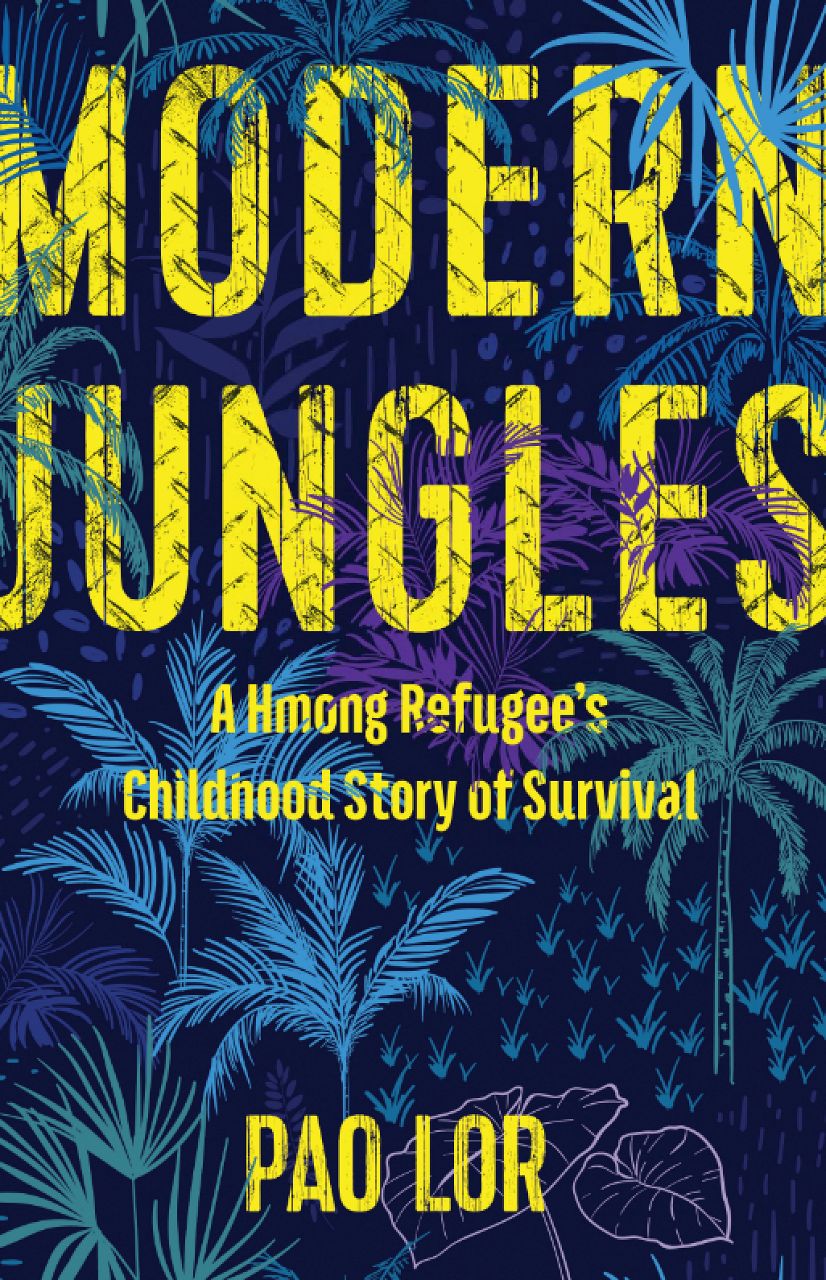
(Courtesy of the Wisconsin Historic Modern society Push)
“These memories have been participating in in my head for a extremely long time,” Lor reported.
* * *
Lor calls his personalized record a “microscopic version” of the Hmong American experience: An historical culture, a disruption, an exodus, and a shift to uncover a new house.
“That was kind of my planet,” he reported. “Being born really isolated from the environment, and then a person working day you just go on this journey that just kept likely, and likely, and going, and going, and you just wonder, at some point, ‘When is this heading to end?’”
Like for many Hmong People in america, Lor’s journey starts in Laos, which he describes in the memoir as “ancient and isolated, beautiful, sensitive, and susceptible.”
The Hmong trace their roots to China, where they lived for hundreds of years in remote places, retaining their own distinctive tradition. But in the 19th century, many fled from China and designed new communities in the mountains of Southeast Asia — like the villages where Lor grew up, which, he writes, have considering that been reclaimed by the jungle.
In the late 20th century, while, the Hmong would face new and devastating worries. As communism took maintain in Laos and Vietnam, the CIA recruited Hmong folks to combat communist forces in what became regarded as the “Secret War,” in which tens of thousands of Hmong shed their life. And just after the war, when international troops withdrew, Vietnamese and Laotian forces focused the Hmong, forcing a lot of of them to flee their villages and seek refuge.
When Lor was 5 years aged, he and his loved ones joined the exodus. Even though he’d afterwards appear to have an understanding of some of the greater forces at play, at the time, he was baffled by the experience.
“For me, the only constant was just asking yourself, ‘What is heading on below?’” Lor explained.
The journey was not simple, and not everyone from the relatives would endure to see the finish. Lor’s father was killed immediately after they experienced moved to a different village, a decline that Lor said he could hardly comprehend but that he felt “in its purest kind.”
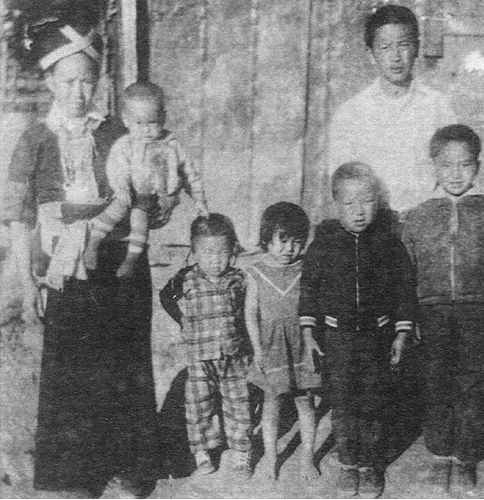
Lor’s parents, siblings, and cousins in Laos ahead of he was born. (Courtesy of Pao Lor)
“It isn’t like when you’re older, and you grieve,” Lor mentioned. “It was more just like a minute. A moment the place it kicks in, where by your human feelings and human instincts arrive into participate in.”
Other individuals, like Lor’s mom and sister, had been dropped as the loved ones saved going south. But Lor and some of his siblings designed it throughout the river into Thailand, huddled into canoes in the early early morning darkness, “the sounds of gunshots echoing throughout the drinking water,” he writes in his book.
However they experienced attained safety in the Thai refugee camps, Lor writes that he and other Hmong nevertheless felt like “kites in a hurricane.”
Ultimately, in 1980, Lor and his family members were being accredited for relocation to the U.S. Numerous Hmong refugees at this time have been remaining resettled into the U.S., particularly finding new homes in California, Minnesota, and Wisconsin.
For Lor, it was just a further step on a extended and disorienting journey.
“You’re residing in tribal huts, then you bit by bit changeover to these refugee camps, and then at some point, land in the middle of Los Angeles,” Lor said. “You’re heading from a person severe close of civilization to the other, in a issue of a couple days.”
* * *
Immediately after traveling across the earth in the stomach of the “iron eagle,” Lor and his loved ones touched down in the U.S. They first lived in Extended Beach front, Calif., before relocating out to Eco-friendly Bay.
Living in the U.S. intended in some means adjusting to a new mindset, Lor mentioned — like possessing to believe about distinct dates, or understand funds, immediately after rising up in a life-style that didn’t rely on these concepts.
And he also faced the problems of living as an orphan, a little something Lor stated is “almost like a taboo in Hmong culture.”
“Without my mothers and fathers, I felt like I didn’t have what other Hmong experienced,” Lor writes. “That I experienced been born out of slender air as an alternative of into a spouse and children.”
For cities like Inexperienced Bay and Wausau, which noticed quick demographic shifts as several new Hmong residents arrived from the ‘70s on, this period was not with no some friction. In his memoir, Lor recounts observing some of the increasing racial tensions firsthand, with young children on the playground or the basketball court docket presently knowledgeable of their discrepancies.
But, Lor pointed out, he also had to reckon with prejudices of his possess. He recalled staying shocked to master that Vietnamese and Laotian kids would be enrolled in the very same lessons as him, just after investing his childhood blaming those nations around the world for all the horrific situations he confronted.
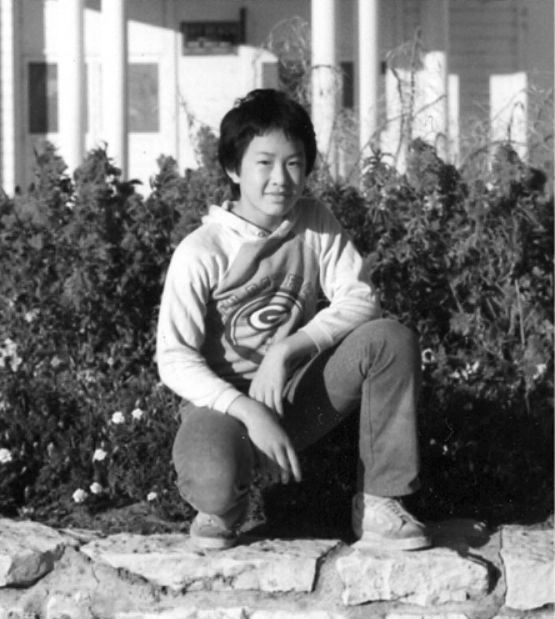
The creator in Environmentally friendly Bay in 1985 . (Courtesy of Pao Lor)
“I was like, ‘Wait a moment, weren’t these the men and women that we ended up battling?’” Lor claimed. “‘Weren’t these folks, you know, the kinds dependable for searching us down? The ones who triggered us to depart our dwelling, to leave our approaches of existence?’”
Confronting his personal assumptions about other groups of persons was a profound encounter, Lor stated. And due to the fact his early times in the U.S., he’s developed to appreciate meeting men and women from all walks of lifetime.
“For me, it’s about people’s intent, and who they are as folks,” Lor stated. “You could be a Buddhist, you could be a Muslim, you could be a Christian, you could be an atheist. What I treatment about is your intentions, and that you use those people sources for excellent.”
* * *
Searching again at his everyday living now, Lor claimed in numerous means, he feels fortuitous.
“There’s a stating in the Hmong society that each and every of us has a predetermined life,” Lor explained. “The story goes that at the reincarnation gate, when you are on your way to starting to be a particular person on Earth, the gatekeeper asks you what variety of lifestyle you want to have. So it’s just about like we’re destined to do one thing. And I have always felt that.”
Right after the 14 a long time that are the target of “Modern Jungles,” Lor went on to turn out to be the initially in his Hmong clan to get his school degree, and finally operate as a trainer and administrator. He lives in Kimberly, Wis., with his spouse and four children.
In his present part, as a professor and chair of UW-Environmentally friendly Bay’s Specialist Software in Instruction, Lor feels he has a duty to improve the future as anyone who is schooling the up coming generations of academics.
Lor did not constantly approach to create a e-book about his experiences, although. In reality, he claimed, the process was fairly unanticipated for him: Following presenting other projects to the Wisconsin Historical Society Press, they questioned him if he’d be intrigued in sharing his possess perspective by way of a memoir.
Karen Thompson, the Press’s director, said her group was “honored” to share Lor’s story and deliver consciousness to the Hmong refugee expertise, which she explained has not usually been told in reserve form.
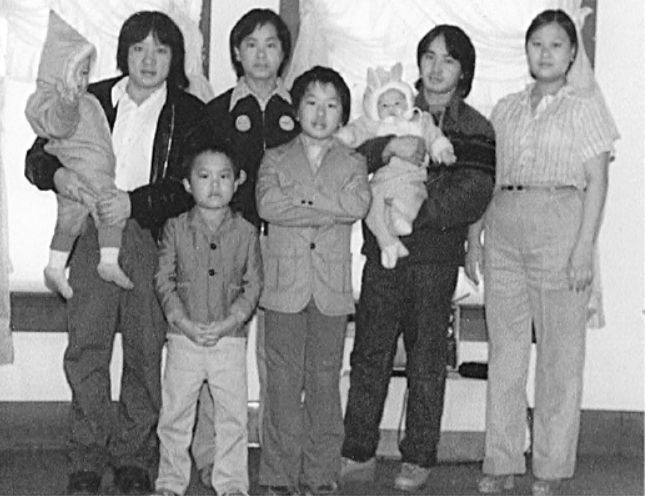
Pao Lor (center) at 10 a long time aged, with family members users in Eco-friendly Bay. (Courtesy of Pao Lor)
“‘Modern Jungles’ shines a light-weight on experiences that numerous of our Wisconsin neighbors have lived by way of but that are unfamiliar to most of us,” Thompson mentioned in an email. “At the similar time, it features themes all people can relate to: Coming of age, beating hardship, and searching for a put in the entire world where we feel we belong.”
Lor’s previous professor and Ph.D. adviser, Clifton Conrad, said he was happy to browse the “beautifully crafted” do the job of his previous scholar, whom he remembers as a strong student and “lovely human being.”
For Conrad, a professor of better education and learning at UW-Madison, the e book captured several of the attributes of its author: Humility, playfulness, authenticity, perseverance. And he mentioned the book could have distinctive takeaways for distinct audiences — serving as an eye-opening narrative for all those who don’t know substantially about the Hmong American working experience, and an inspiring story for those who have shared some of Lor’s issues.
“There is no self-pity,” Conrad explained. “He’s telling this tale, and it is a sad story in many methods, but it is also a tale of resilience.”
For his aspect, Lor stated he actually desired to seize the essence of his personal memories and retain their cultural integrity, when also making his memoir accessible to readers from all backgrounds.
In Lor’s perspective, we commit far too a great deal time fighting to protect our have beliefs, rather of recognizing what values we have in prevalent — like peace, and understanding, and neighborhood. Lor knows there are countless numbers of tales like his own out there, and said he hopes that sharing his daily life will aid encourage or rework audience in some smaller way.
“I assume it just will come down to persons remaining additional inclined to to comprehend other people’s ordeals,” Lor reported. “To be more brave. To just be a section of other unique cultural experiences. To ask, and to worth that every of us basically has a diverse way of having to exactly where we are at.”


