
When 1 in 3 users are travellers, that modifications the bicycle-share equation for towns
Bike-share systems have in the past been built and operated with residents as the primary focus. These shared bikes have primarily been regarded as a way to resolve the “final mile dilemma” – the length among the final spot and the closest community transportation cease which is witnessed as much too significantly to wander and as well shut to drive.
My new study released in the Journal of Sustainable Tourism problems this placement. The research results from the Pacers Bikeshare method in the US city of Indianapolis show the remarkable demand from customers holidaymakers can deliver for bike-share plans. In convert, the group gains excess worth from tourism and the in general enriched customer expertise. Website visitors incurred a lot more than 2 times the consumer charges of inhabitants.
This all adds up to considerable earnings for the program and an economic gain for the town. It adjustments the calculations about the viability and worth of bicycle-share techniques, which deliver huge financial benefits to towns.
Examine more:
Billions are pouring into mobility engineering – will the transport revolution are living up to the buzz?
A COVID-pushed bike boom
Share bikes and other varieties of micromobility this sort of electrical scooters (e-scooters) and e-bikes have emerged as an excellent signifies of transportation and outdoor recreation for both people and people in a COVID (and publish-COVID) earth.
Read through extra:
Why e-bikes can realize success the place previously bicycle-share strategies unsuccessful
People are doing work from residence, travelling less and have pandemic-linked security considerations. General public transport patronage has frequently declined as a result.
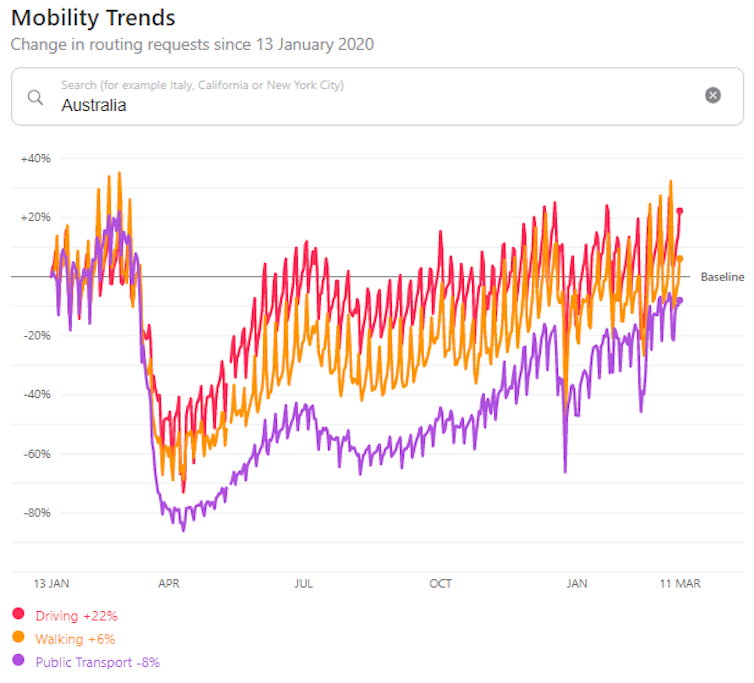
Apple Mobility Tendencies, CC BY
Amid COVID-19 lockdowns and outbreaks, communities throughout Australia and abroad are experiencing a cycling boom. Bicycle retailers everywhere are overcome and utilised bikes are really hard to find. Bicycle-share use has risen as men and women glance for affordable solutions to general public transport and ways to be energetic outdoor safely.
Bike-share courses have their time to glow, not just as transport for citizens but for tourism needs also.
Browse much more:
Coronavirus restoration: public transport is critical to avoid repeating outdated and unsustainable faults
Tourists are an significant person group
This major change in transport patterns incorporates holidaymakers. We uncovered they are a significant and rewarding consumer group. In our analyze, tourists accounted for additional than a 3rd of all customers of the bike-share process around far more than four several years.
Bicycle-share allows for freedom in discovering a city. Visitors use these programs to check out urban places in a leisurely way. They quit frequently at well-liked tourist points of interest and at area retail outlets, eating places and bars alongside the way.
This means the financial and social added benefits of tourism activity can be distributed a lot more greatly all over a neighborhood – into neighbourhoods and absent from metropolis centres and tourism scorching spots – compared to cars and trucks and mass transit techniques.
Further, when people use bicycle-share techniques, they get a more local, genuine and environmentally sustainable knowledge. The bikes permit for greater access to local neighbourhoods, cultural places, tourist web-sites and corporations than tour buses, ride-share operators and community transport can give.
Read through far more:
To bolster our fragile highway and rail program we have to have to increase a ‘micro-mobility’ community
Making certain a COVID-risk-free ride
Share bikes give a fairly get hold of-free of charge and socially distanced choice to buses, trains and trip-share autos.
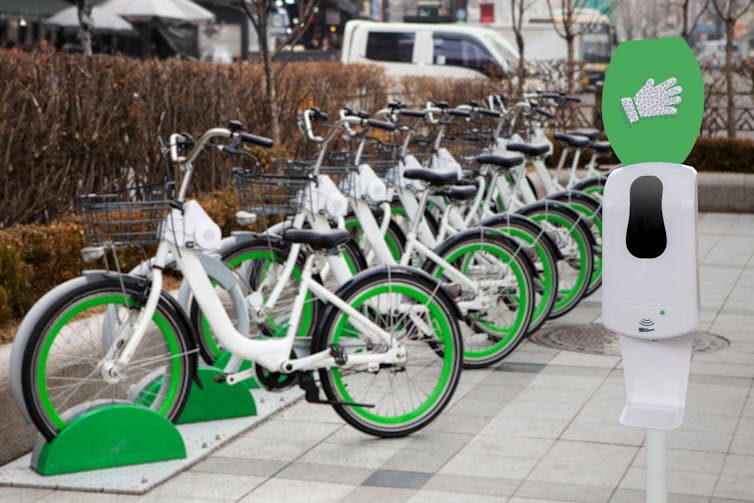
Bike-share operators just about everywhere are responding to the amplified worries about the need to have for safe choice transportation. The variety of techniques to make sure COVID basic safety include:
- greater cleaning and disinfection
- distribution of bikes at docking stations to permit for social distancing
- speak to-cost-free transactions
- promotion of public wellbeing guidelines this sort of as carrying masks and social distancing
- even anti-viral handlebars.
Shutterstock
Some applications have really tailored to the change from general public tranport to bicycle sharing by giving important personnel and healthcare personnel free of charge or discounted memberships. In New York, as subway use has dropped, the metropolis has constructed bicycle-share stations around hospitals.
The future of micromobility
Bicycle-share schemes provide various group-large positive aspects for city citizens during the globe. They are a adaptable, handy, affordable, active and sustainable transport alternative for both inhabitants and site visitors. These strategies assistance lower travel instances, decrease carbon emissions, boost bodily activity and hook up people to their community.
Micromobility choices which includes bicycle-share courses will continue on to attain popularity very well into the upcoming as communities look to increase urban mobility in a sustainable and lively way. The rise of e-scooters and dockless bicycle courses marks a transition from govt-primarily based bike-share initiatives to entrepreneurial ventures. It has fuelled rapid advancement in the field throughout the world.
Read a lot more:
Limes not lemons: lessons from Australia’s very first e-scooter sharing trial
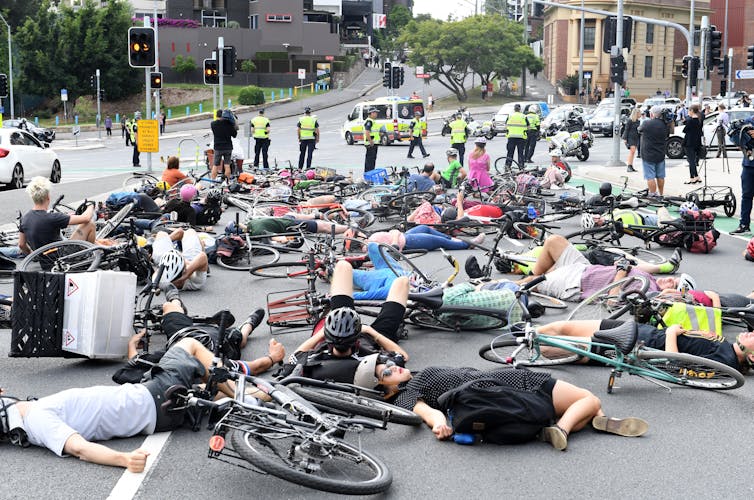
The challenge now is for towns to keep up with this upward trend by producing the vital bodily infrastructure these kinds of as bicycle lanes, bike paths and so on.
Dave Hunt/AAP
Reaping the comprehensive positive aspects of bike-share plans and tourism relies upon on encouraging guests to use these bikes. Approaches to do this include building aids to enhance simplicity of use, these types of as digital cycling guides, maps, apps and companion packages with community enterprises.


